I watched a video recently of Barbados Prime Minister Mia Amor Mottley talking about reparations, and one word stayed with me long after the video ended:
Repair.
We hear the word reparations and almost immediately the conversation becomes about money. Who should pay? How much should they pay? Who should receive it? Those are legitimate questions, and at some point they have to be part of the conversation.
But I wonder if we’re starting in the wrong place.
Before we can talk seriously about reparations, we have to be willing to talk about repair. And before anything can be repaired, we have to acknowledge what happened in the first place.
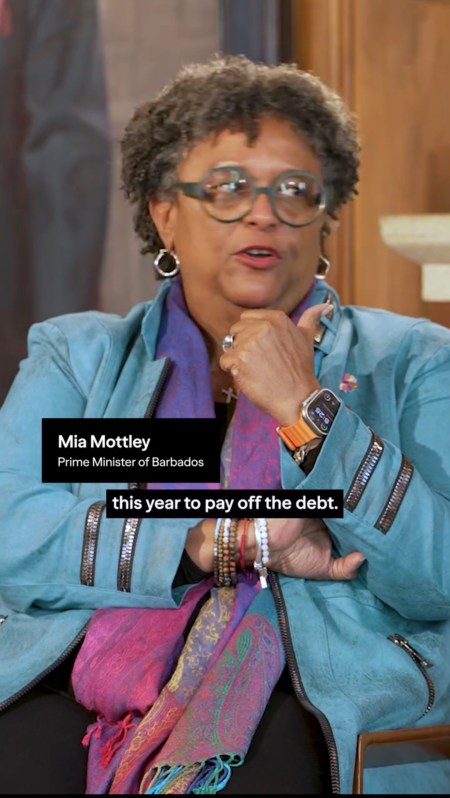
That is what Mottley’s conversation made me think about.
For those of us from the Caribbean, this isn’t simply an academic discussion about something that happened hundreds of years ago. The history of slavery, colonialism, emancipation and the relationships that followed helped shape the Caribbean we inherited. We cannot change that history, but we also shouldn’t bury it because parts of it are uncomfortable.
History doesn’t disappear because we stop talking about it.
And silence has never repaired anything.
The Past Isn’t Really the Past
Whenever conversations about reparations begin, it doesn’t take long before someone asks why we’re still talking about slavery or why we can’t simply move forward.
I’ve always found that interesting.
We study wars to understand the world that followed them. We study economic depressions, revolutions, migration, presidents, kings and inventions because we recognize that what happened before us helps explain what exists around us today.
Why would slavery and colonialism be any different?
Understanding history isn’t the same as being trapped by it.
In fact, I would argue that understanding our history gives us a better chance of not being trapped by its consequences.
Growing up in the Caribbean, I learned to appreciate everything our relatively small islands have given the world. Our music. Our food. Carnival. Our language. Our humor. Our creativity. Our ability to make something meaningful from limited resources and then watch the rest of the world discover it, remix it, market it and sometimes forget where it came from.
We rightfully celebrate Caribbean resilience.
But we should also be willing to ask what Caribbean people had to be resilient against.
That question doesn’t diminish the beauty of our culture. It gives that culture context.
Slavery happened. Colonialism happened. Africans were forcibly transported across the Atlantic and treated as property. Indigenous populations suffered displacement, violence and enormous loss. European powers built economies in the Caribbean around labor, land and resources that benefited interests far beyond the islands themselves.
Acknowledging that history isn’t about assigning personal guilt to someone living today for something another person did centuries ago.
It’s about understanding cause and effect.
And that’s where the idea of repair becomes important.
What Are We Actually Trying to Repair?
One thing I appreciate about the broader Caribbean conversation surrounding reparations is that it isn’t limited to the idea of someone writing a check.
CARICOM’s reparatory justice framework includes acknowledgment, education, healthcare, cultural preservation and restitution, economic development, debt issues and financial compensation.
That broader definition forces us to ask a much more interesting question:
What actually needs to be repaired?
Maybe repair means investing more deeply in Caribbean education so our children understand their history from a Caribbean perspective.
Maybe it means preserving historical buildings and sites instead of watching them disappear.
Maybe it means returning cultural artifacts and opening archives so Caribbean people have greater access to their own history.
Maybe it means healthcare, infrastructure, economic development and creating opportunities that allow more Caribbean young people to build their futures at home rather than believing success requires leaving.
And yes, maybe financial restitution belongs in that conversation too.
There won’t be one answer because the damage wasn’t one-dimensional.
But we cannot seriously discuss solutions until we’re willing to examine what happened.
How can we repair something while refusing to acknowledge how it was broken?
For Me, This Conversation Is Personal
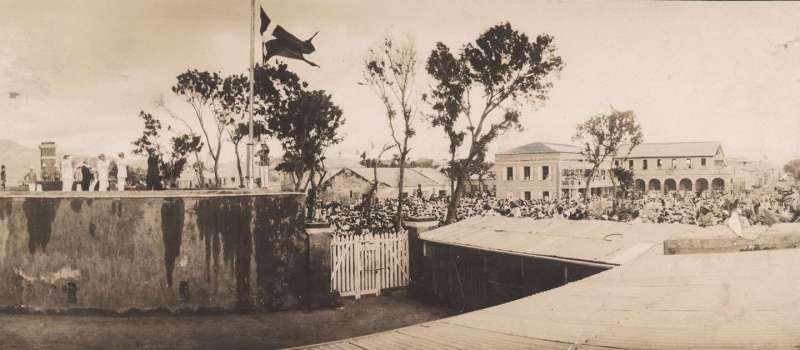
I was born in St. Thomas and grew up between St. Thomas and St. John in the U.S. Virgin Islands.
The place I call home was once the Danish West Indies.
In 1917, the United States purchased the islands from Denmark for $25 million in gold.

When I think about that today, one part of the story always stands out to me.
The transaction was between Denmark and the United States.
The islands changed hands.
The people remained.

Ten years later, U.S. citizenship was conferred on Virgin Islanders. Today, people born in the U.S. Virgin Islands are U.S. citizens. Yet U.S. citizens residing in the Virgin Islands cannot vote for President in the general election.
I consider that a travesty.
I’m not suggesting that presidential voting rights and reparations are the same issue. They aren’t.
But I do believe they belong within a larger conversation about history, citizenship, representation and power.
How did we arrive at a place where someone can be born an American citizen and still live in a part of the United States where that citizen cannot cast a general-election vote for President?
Whether someone agrees with my position or not, I believe that’s a question worth asking.
And that’s really what this entire conversation is about.
We have to be willing to ask the difficult questions.
History Is Still Being Written
This feels especially personal right now because the U.S. Virgin Islands is in the midst of its Sixth Constitutional Convention, with delegates elected by the people working toward a proposed constitution for the Virgin Islands.
One of those delegates is my mother, Alecia Wells.
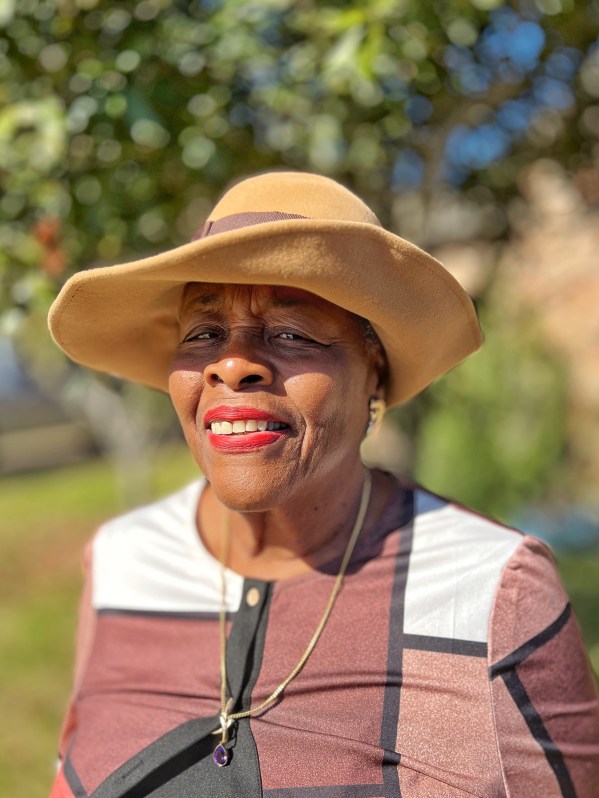
She was elected by the people of the Virgin Islands and serves as Chairwoman of the Convention’s Standing Committee on Culture & Heritage.
There is something about that connection that I find incredibly powerful.
I was born in islands whose transfer from one nation to another was negotiated more than a century ago between Denmark and the United States.
Now my mother is participating in an effort by Virgin Islanders to help determine what a constitution written for the people of the Virgin Islands should say.
When I put those two moments beside each other, separated by more than a century, I can’t help but think about who gets to make decisions about a people and who gets to tell their story.
For generations throughout the Caribbean, many of those decisions were made somewhere else. Laws, commerce, land, citizenship and systems of government could be determined thousands of miles away by people who might never experience the consequences of those decisions themselves.
Today, Virgin Islanders are having conversations about our own future.
That doesn’t erase the past.
It demonstrates why understanding the past matters.
Because history isn’t something that ended.
We’re still writing it.
Protecting Culture Means Protecting the Whole Story
This is also why I believe this conversation belongs on Protect Our Culture.
When we talk about protecting culture, it’s easy to focus on the things we can see and hear.
Music.
Art.
Sneakers.
Fashion.
Carnival.
Food.
Language.
Traditions.
Those things absolutely deserve protection.
But culture also carries memory.
If we protect the celebration but lose the history behind it, eventually we lose the context that gave the celebration meaning in the first place.
That’s why protecting culture also means protecting stories—even the uncomfortable ones.
We shouldn’t teach history to make the next generation angry.
We should teach history so the next generation is informed.
Give young people the facts. Give them context. Let them understand what their ancestors experienced, what they survived, what they created and what they passed forward.
Then give them the freedom to decide what they want to build next.
That’s how culture stays alive.
Repair Also Requires Looking at Ourselves
There is another side of this conversation that Caribbean people have to be willing to confront.
We can’t talk about repair as though everything depends upon somebody else fixing us.
Our governments have responsibilities.
Our institutions have responsibilities.
Our communities have responsibilities.
And we have responsibilities as individuals.
We should absolutely ask what former colonial powers and institutions that benefited from slavery and colonialism owe to the societies affected by those systems.
But we should be equally willing to ask what we owe ourselves.
Are we properly teaching our history?
Are we preserving our historical sites?
Are we documenting the stories of our elders before those stories disappear?
Are we creating opportunities for young people?
Are we building institutions capable of surviving beyond their founders?
Are we preserving our culture while still allowing the next generation to add something new to it?
Those aren’t opposing conversations.
They are part of the same conversation about repair.
Acknowledging what was done to us doesn’t relieve us of responsibility for what we do for ourselves.
If anything, knowing our history should make us more intentional about what we build next.
What Comes After Acknowledgment?
That’s where Mia Mottley’s video ultimately took me.
Not backward.
Forward.
Her words made me think less about the question of whether we should talk about reparations and more about what meaningful repair could actually look like.
What was taken?
What was lost?
What survived?
What did our ancestors create anyway?
What systems from that history continue to influence Caribbean societies today?
What deserves to be restored?
What needs to be rebuilt?
What should be preserved?
And what do we want our islands to look like fifty or one hundred years from now?
I don’t pretend to have all of those answers.
I don’t think anyone does.
But that’s exactly why the conversation matters.
We’re going to disagree. We should expect to. Reparations, colonialism, citizenship, race, economics and political representation are complicated subjects. Honest conversations about them aren’t always going to be comfortable.
Comfort shouldn’t be the goal.
Understanding should be.
Because burying history doesn’t make history disappear.
We cannot change what happened, but we can decide what we do with what happened.
We can acknowledge it without being consumed by it.
We can study it without living in it.
We can preserve it without allowing it to define the limits of our future.
And where damage remains, we can have the courage to ask what meaningful repair looks like.
That’s what Mia Mottley’s words sparked in me.
Reparations shouldn’t only force us to ask what is owed.
They should force us to ask what needs to be repaired, what responsibility we have in that repair, and what kind of future we’re trying to create once the work begins.
Because before we can repair anything, we have to be willing to tell the truth about how we got here.
And telling that truth isn’t about living in the past.
It’s about making sure we’re prepared to write what comes next.

