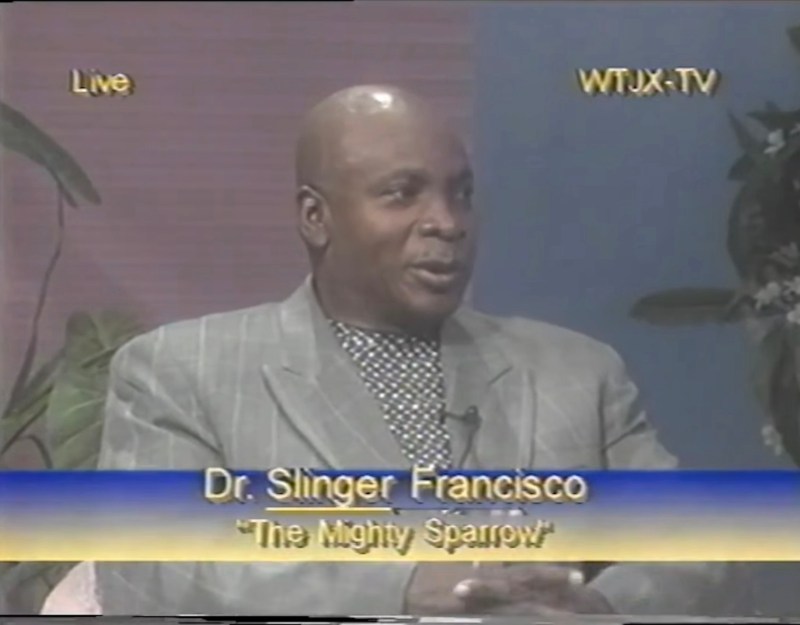
Slinger Francisco used Calypso to make Caribbean people laugh, dance, think and sometimes take a harder look at ourselves. For those of us who grew up with his music, his passing isn’t simply the loss of the Calypso King of the World. It’s the loss of one of the great teachers and storytellers of Caribbean culture.
I grew up in St. Thomas and St. John listening to The Mighty Sparrow.
That’s important for me to say at the beginning because Sparrow wasn’t someone I discovered later in life while researching Caribbean music. His music was already there.
I heard his songs growing up, and I heard Virgin Islands bands play covers of his music. That was part of the beauty of Caribbean music. A song might begin in Trinidad, but it didn’t remain there. Musicians throughout the islands would learn it, play it and introduce it to another audience. Long before streaming made every song instantly available everywhere, Caribbean people were already carrying Caribbean music from island to island.
That’s part of what made Slinger Francisco—The Mighty Sparrow—so important.
Sparrow died on September 27 at the age of 91. Born in Grenada and raised in Trinidad and Tobago, he became one of the defining figures in Calypso over a career that lasted more than six decades. His 1956 breakthrough, “Jean and Dinah,” helped establish a career that would produce hundreds of songs and carry Calypso far beyond Trinidad and Tobago.
But reducing Sparrow to his recordings, awards and performances misses something important.
Sparrow taught.
The Song Was the Classroom
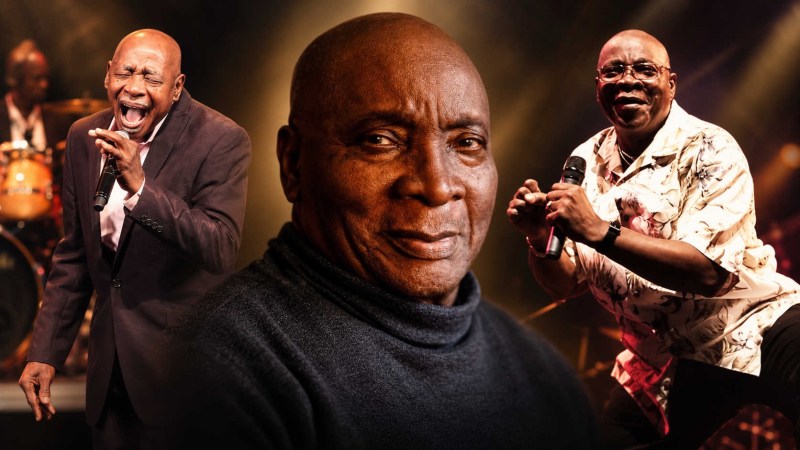
One of the remarkable things about Calypso is that the lesson doesn’t always announce itself as a lesson.
You might be dancing. You might be laughing. You might be singing the chorus. Then somewhere inside the song, the Calypsonian makes you think.
That was Sparrow’s gift.
He could talk about politics and poverty. He could talk about relationships, sex and love. He could confront colonialism and inequality. He could make fun of somebody, and he could make fun of us. Sometimes he could tell young people exactly what he believed they needed to hear.
His song “Education” is probably one of the clearest examples.
The message wasn’t complicated: education mattered. Knowledge created opportunity. Young people needed to learn today if they expected to have greater opportunities tomorrow. He warned young people about allowing the wrong influences to lead them away from their education and pushed against the idea that ignorance was something to accept.
Think about that for a moment.
A Calypso song could function as a lesson.
But Caribbean people didn’t need a classroom to understand it.
Sparrow had already put the lesson inside the music.
Don’t Settle for Mediocrity
That’s one of the things I hear differently in Sparrow’s music as an adult.
He wasn’t simply telling young people to get an education because a certificate looked good on the wall. There was a larger message about what we could become.
Learn.
Think.
Improve yourself.
Don’t allow somebody else to determine what you’re capable of becoming.
Don’t follow people who aren’t going anywhere.
And don’t settle for being mediocre when you have the ability to become something more.
That message carries even greater weight when we consider the Caribbean Sparrow came from. He grew up during British colonial rule and came of age as Trinidad and Tobago moved toward independence. His music spoke about colonialism, politics, social inequality and the everyday experiences of Caribbean people. He described himself as a voice for the underprivileged.
Education, in that context, wasn’t simply about employment.
Knowledge was power.
Look Out for One Another
There was another lesson running through Sparrow’s music and through the Caribbean culture surrounding it.
We have a responsibility to one another.
Growing up on small islands teaches you something about community. Your neighbor isn’t some abstract person living miles away. The person teaching your child may know your family. The person playing in the band on Saturday night may be somebody you see at work during the week. Somebody’s grandmother knows somebody else’s mother.
Community isn’t theoretical.
You live inside it.
Sparrow’s music reflected that world. Sometimes he celebrated it. Sometimes he criticized it. Sometimes he exposed its contradictions and hypocrisy.
But criticism can also be an act of care.
If you don’t care about your community, there’s little reason to challenge it to become better.
That is something Calypso has historically done extremely well. The Calypsonian could look at society and essentially say, “We need to talk about this.”
Then put a rhythm underneath the conversation.
Love Didn’t Always Sound Like a Love Song
Sparrow also understood relationships in all their complexity.
His catalog could be romantic, mischievous, sexual, funny and brutally observant. Some of those songs unquestionably belong to the era in which they were written, and listeners today may hear parts of them differently.
That’s part of protecting culture too.
We don’t have to pretend everything from the past fits perfectly into the present. We should understand the context in which it was created.
Sparrow chronicled how people talked about love, desire, money, marriage, infidelity and relationships. Those songs become little cultural documents because they tell us something about the attitudes and conversations taking place when they were recorded.
That’s what storytellers do.
They don’t only record our best behavior.
They record us.
Trinidad Made Sparrow. The Caribbean Carried Him.
This is the part of Sparrow’s story that feels particularly personal to me.
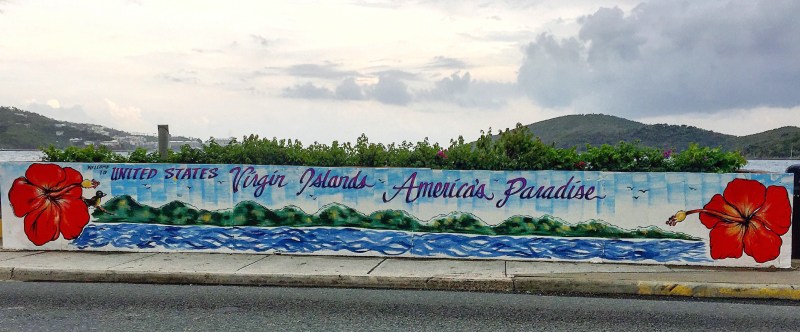
America’s Paradise.
I didn’t grow up in Trinidad.
I grew up in the U.S. Virgin Islands.
And Sparrow was still part of the soundtrack.
Virgin Islands musicians covered his songs. His music traveled through the same Caribbean networks that carried Calypso, Soca, Reggae and eventually Hip Hop between islands and across the diaspora.
That tells us something important about Caribbean culture.
Our islands have distinct identities. Trinidad isn’t St. Thomas. St. Thomas isn’t Jamaica. Jamaica isn’t Barbados. Barbados isn’t Grenada. We shouldn’t flatten those differences into one generic Caribbean experience.
But culture has always moved across the water.
A musician hears something from another island and plays it. A DJ brings records home. A Carnival band learns a song. Someone travels and brings music back. A radio station introduces an artist to another audience. People migrate, records travel and music gets passed from one generation to another.
Eventually, children growing up hundreds of miles from where a song was created know the words.
That was cultural influence without an algorithm.
Calypso Was Social Media Before Social Media
Today, when something happens, we open our phones.
Someone posts about it. Someone makes a joke. Someone criticizes the government. Someone explains the history. Someone argues back. Someone turns the whole thing into entertainment.
The conversation unfolds almost instantly.
Calypso performed many of those functions long before social media existed.
The Calypsonian watched society and commented on it.
Politics. Race. Class. Sex. Education. Corruption. Relationships. Colonialism. Independence. Everyday foolishness.
Nothing was necessarily off limits.
That’s why Sparrow’s catalog deserves to be treated as more than entertainment.
His songs are also primary sources.
They allow us to hear Caribbean people talking about themselves, criticizing themselves, celebrating themselves and making sense of the world around them from inside the Caribbean experience.
When Sparrow died, Barbados Prime Minister Mia Mottley captured that idea beautifully when she said:
“Listen to his recordings and you hear our history.”
That may be one of the best explanations of why his work matters.
The Music Traveled Because People Carried It
When I think about hearing Virgin Islands bands play Sparrow’s music growing up, I understand those memories differently now.
At the time, I wasn’t thinking about cultural preservation.
I wasn’t thinking about archives.
I wasn’t thinking about the movement of Calypso throughout the Caribbean.
I was simply hearing music that was part of the world around me.
Now I understand that those musicians were doing something else at the same time.
They were carrying culture.
Every time a band in St. Thomas or St. John learned one of Sparrow’s songs and performed it for another crowd, the music traveled another mile.
Every time somebody bought the record, played it on the radio or introduced it to their children, the story continued.
That is how culture survives.
Not simply because someone puts something behind glass in a museum.
Culture survives because people decide something is worth carrying forward.
We Have to Teach the Music, Not Just Play It
This is where Sparrow’s passing should challenge us.
Playing his music isn’t enough.
Naming a street after him isn’t enough.
Putting his photograph inside a museum isn’t enough.
Calling him the Calypso King of the World isn’t enough.
We have to explain why the music mattered.
A young Caribbean person should be able to hear one of Sparrow’s songs and have somebody explain what was happening in the Caribbean when he recorded it.
Why was he making that joke?
Who was he criticizing?
What political issue was he responding to?
What did that phrase mean at the time?
Why did our parents and grandparents laugh when they heard it?
Why did bands on other islands learn his songs?
And what was Sparrow trying to teach us?
That’s where preservation begins.
The recording preserves the sound.
Context preserves the culture.
Thank You, Sparrow
I’ve been thinking about the young boy I was in the Virgin Islands hearing Sparrow’s music.
I couldn’t have understood everything he was saying then.
But I understood the music.
As I got older, I began to understand more of the message.
Take care of yourself.
Get your education.
Think for yourself.
Care about the people around you.
Love.
Laugh.
Pay attention to what the people in power are doing.
Call out foolishness when you see it.
And don’t settle for mediocrity when you have the ability to do better.
Those are bigger lessons than any single song.
Sparrow made us laugh. He made us dance. He challenged us to think. He reminded us that people matter. He demonstrated that you could love your community enough to criticize it when it needed to do better.
And perhaps most importantly, he showed us that Caribbean stories didn’t need someone from outside the Caribbean to make them important.
We could tell our own stories.
In our own voices.
With our own humor.
Over our own rhythms.
Slinger Francisco is gone.
The Mighty Sparrow isn’t.
He’s still there every time somebody puts on one of those records. Every time a band plays one of those songs. Every time a parent introduces the music to a child. Every time somebody hears a lyric and realizes there was a lesson hiding inside the music.
That’s the responsibility Sparrow leaves us with.
Don’t just play the songs. Teach people why they mattered.
Because protecting the music means protecting the lessons inside it.


This is such a powerful tribute, Dee. Growing up, the Mighty Sparrow’s music was always playing at home and in places of business, especially during carnival season. My grandparents, aunts, and uncles didn’t just listen, because they knew every single word by heart and would break down the deep messages behind the lyrics. He truly was a master teacher and storyteller, and his legacy is a permanent part of our cultural fabric. Thank you for capturing this so well.
LikeLike