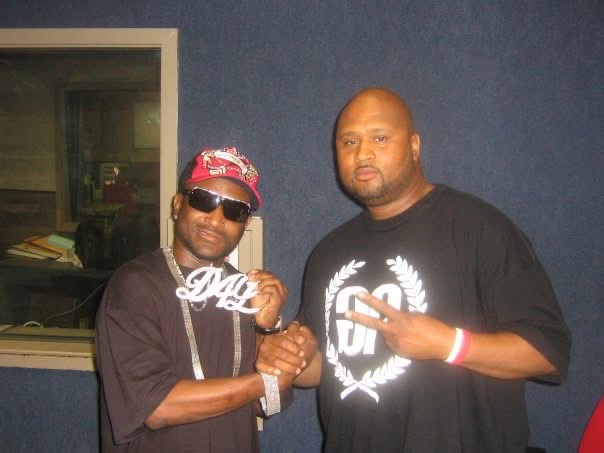
Photo courtesy of Robert Moore.
A new Kirk Franklin and GloRilla record took me back to the day I met Shawty Lo—and reminded me why we have to document culture while we’re living it.
I didn’t know this photograph would become important when it was taken.
I was in Atlanta for DJ Greg Street’s Sneaker Friends event. I had invited my friend Robert Moore to come with me, and while we were there, we visited Greg at V-103.
That day, Shawty Lo came through the station with a record.
“Dey Know.”
Greg played it on the air.
At the time, I wasn’t standing there thinking I was witnessing a moment in Southern Hip Hop history.
We were simply living it.
Nearly 20 years later, Kirk Franklin made me think about that day again.
Wait…I Know That Sound
On September 22, Kirk Franklin appeared with Fat Joe and Jadakiss on Joe and Jada and premiered his new single, “This Time,” featuring GloRilla.
As soon as the record started playing, my ears went somewhere else.
Atlanta.
Shawty Lo.
“Dey Know.”
If you know that era of Southern Hip Hop, the connection is hard not to hear.
I’m intentionally being careful about calling it a sample. Until the official credits establish exactly what’s happening musically, I don’t know whether we’re hearing a sample, interpolation, replay or something else.
But I know what I heard.
And more importantly, I know what it made me remember.
It took me back to V-103.
When “Dey Know” Was Just a New Record
There’s something different about remembering a song as a classic and remembering it before anybody knew what it would become.
That’s what the photograph brought back for me.
Robert and I were visiting Greg Street at V-103 when Shawty Lo came through with “Dey Know.” Greg played the record on the air.
Years later, Robert shared the photograph on Facebook and wrote:
“Shawty Lo, dropped ‘Dey Know’ that day.”
Sometimes somebody else’s memory unlocks your own.
I remembered the room.
I remembered Shawty Lo.
I remembered Greg.
And I remembered a time when getting your music heard could mean physically walking into a radio station with a record and getting it into the hands of a DJ.
Think about how much has changed.
Today, an artist can upload a song from a laptop. A snippet can explode across social media before the full record is released. Millions of people can hear something without a radio station ever touching it.
That wasn’t the world we were living in then.
Radio still had tremendous power.
The DJ mattered.
Relationships mattered.
Being in the building mattered.
And in Atlanta, Greg Street mattered.
What seemed like an ordinary interaction at the time looks very different when you look back at it through the lens of history.
That’s the thing about culture.
It rarely tells you when you’re standing in an important moment.
Sneakers Put Me in the Room
There’s another part of this story that shouldn’t be overlooked.
I wasn’t in Atlanta because I worked in radio.
I was there because of sneakers.
My relationship with Greg Street through sneaker culture went back before that visit to V-103.
On July 22, 2006, Greg produced the Sole Collector: The Mixtape Vegas ’06, with Steve Mulholland and me serving as executive producers. It was another example of something I’ve believed for years: sneakers and Hip Hop have never existed in separate cultural spaces.
Music was part of sneaker culture. Sneakers were part of Hip Hop. And people like Greg moved naturally between both worlds.
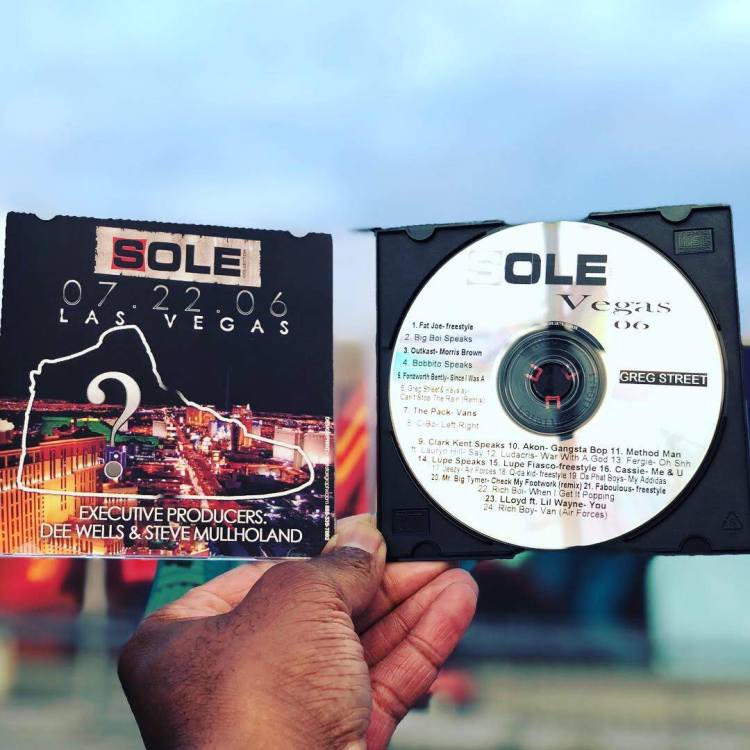
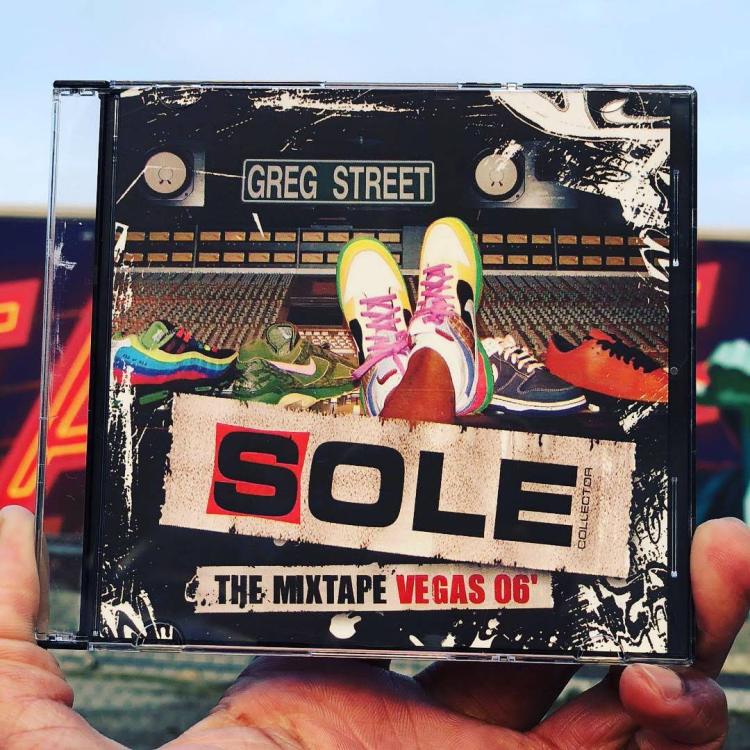
Greg Street’s Sneaker Friends brought me to Atlanta.
That sneaker relationship put me at V-103.
And being at V-103 put me in the room with Shawty Lo.
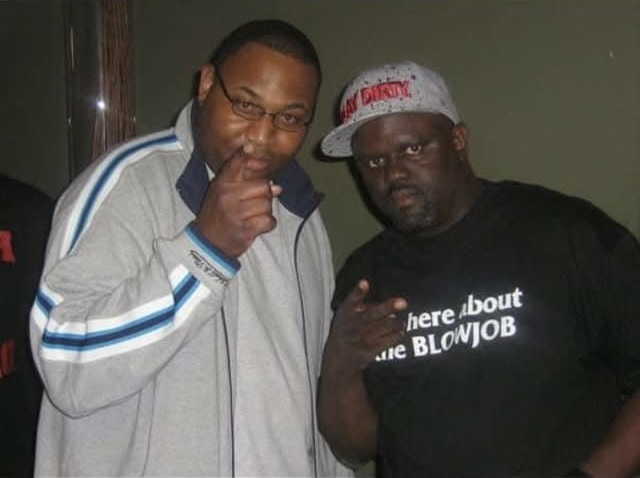
That’s why I’ve never understood attempts to separate sneakers from everything surrounding them.
Sneaker culture doesn’t exist on an island.
Neither does Hip Hop.
Music connects to sneakers.
Sneakers connect to fashion.
Fashion connects to art.
Art connects to design.
Radio connects to community.
And people connect all of it.
Sometimes following one part of culture puts you directly in the path of another.
I didn’t go to Atlanta expecting to witness a moment connected to a record we’d still be discussing almost 20 years later.
I went to a sneaker event.
Culture did the rest.
Yesterday’s New Music Is Today’s Cultural Memory
“Dey Know” was released in 2007.
That means we’re approaching 20 years since a record I remember as new entered the world.
That’s strange to think about.
Someone who was 15 when “Dey Know” came out is now in their 30s.
The teenagers who heard it coming out of car speakers aren’t teenagers anymore.
And for a younger generation, Shawty Lo isn’t contemporary Hip Hop.
He’s part of Hip Hop history.
That’s when something interesting happens.
Yesterday’s music becomes today’s source material.
The songs we danced to become songs producers reach back for.
The sneakers we wore become retros.
The T-shirts we threw away become vintage.
The magazines stacked on our floors become archives.
The party flyers somebody left underneath a windshield wiper become collectibles.
And things people once dismissed as trends eventually end up behind glass in museums.
I’ve watched that happen with sneakers.
We’re watching it happen with Hip Hop.
Kirk Franklin Has Been Having This Conversation for Decades
That’s also why Kirk Franklin is such an interesting person to bring all of this together.
Kirk has spent much of his career challenging people’s ideas about what gospel music is supposed to sound like.
Go back to 1997.
“Stomp.”
The record drew from Parliament-Funkadelic’s “One Nation Under a Groove.” Salt from Salt-N-Pepa appeared on it. Gospel was being presented with the energy and musical language of contemporary Hip Hop.
And not everybody was comfortable with it.
There were debates about whether gospel should sound like that.
Whether it should look like that.
Whether those worlds belonged together.
Almost 30 years later, Kirk Franklin’s place in gospel music isn’t really a question.
But it’s worth remembering the resistance because culture has a funny way of doing that.
Yesterday’s controversy has a way of becoming today’s tradition.
The thing people criticize in one generation can become the blueprint for another.
GloRilla Isn’t Just a Feature
GloRilla’s presence makes this story even more interesting.
This isn’t the first musical connection between her and Kirk Franklin.
Her 2024 album GLORIOUS included “RAIN DOWN ON ME,” bringing together GloRilla, Kirk Franklin, Maverick City Music, Kierra Sheard and Chandler Moore.
So “This Time” isn’t simply an older gospel artist calling one of today’s biggest rappers because he wants a contemporary feature.
There’s already a musical conversation happening between them.
Now add the sound that took me back to Shawty Lo.
Kirk Franklin.
Shawty Lo.
GloRilla.
Texas.
Atlanta.
Memphis.
Gospel.
Hip Hop.
Different cities.
Different generations.
Different moments in Southern Black music.
Connected.
Culture Is Talking to Itself
That’s what fascinates me about all of this.
Culture is talking to itself.
One generation creates something.
Another generation grows up with it.
Someone else discovers it.
An artist reinterprets it.
And eventually a kid hears the new record without knowing anything about the music that came before it.
That’s when storytelling matters.
Because somebody has to say:
This came from somewhere.
Somebody made it.
Somebody believed in it.
Somebody played it.
Somebody danced to it.
Somebody wore it.
Somebody photographed it.
Somebody saved it.
And somebody remembers.
That’s preservation.
Not simply protecting an object.
Protecting its context.
Hip Hop Can Now Reach Back Into Hip Hop
Hip Hop has always been in conversation with music that came before it.
Sampling made that conversation part of the foundation of the culture.
Producers dug through crates looking for pieces of funk, soul, jazz, disco, rock and gospel.
Old records became new records.
And sometimes those new records sent another generation searching for the originals.
But we’re far enough into Hip Hop’s history now for the culture to reach deeply into itself.
The ’80s influenced the ’90s.
The ’90s influenced the 2000s.
The 2000s are influencing the 2020s.
And eventually the music being made today will become source material for somebody who hasn’t even been born yet.
Hip Hop isn’t simply getting older.
Hip Hop has an archive.
Protect It While It’s Happening
That photograph with Shawty Lo means something different to me today than it did when it was taken.
Back then, it was a picture from a trip to Atlanta.
Today, it’s connected to a story.
I can look at it and remember why I was there.
Sneaker Friends.
Greg Street.
V-103.
Shawty Lo.
“Dey Know.”
One moment led to another.
Artist to DJ.
DJ to radio.
Radio to Atlanta.
Atlanta to the South.
The South to the world.
And almost 20 years later, a Kirk Franklin record featuring GloRilla brings the memory right back.
That’s culture in motion.
And maybe that’s the lesson.
We shouldn’t wait until something becomes nostalgic before deciding it’s worth documenting.
Somebody is making a record today that people will study 30 years from now.
Somebody is wearing a pair of sneakers that will eventually sit inside a museum.
Somebody is designing a flyer people will throw away tonight that a collector will desperately search for decades from now.
Somebody is taking a photograph that doesn’t seem particularly important.
Yet.
We don’t always know which moments will become history.
That’s exactly why we have to document them while they’re still happening.
When I heard “This Time,” I didn’t just hear Kirk Franklin and GloRilla.
I heard Atlanta.
I heard V-103.
I heard Greg Street.
I heard Shawty Lo.
I remembered “Dey Know” when it wasn’t nostalgia.
It was new.
And I remembered being there.
Culture doesn’t disappear.
It gets passed down.
Reinterpreted.
Remixed.
Remembered.
And protected.
Protect Our Culture.

