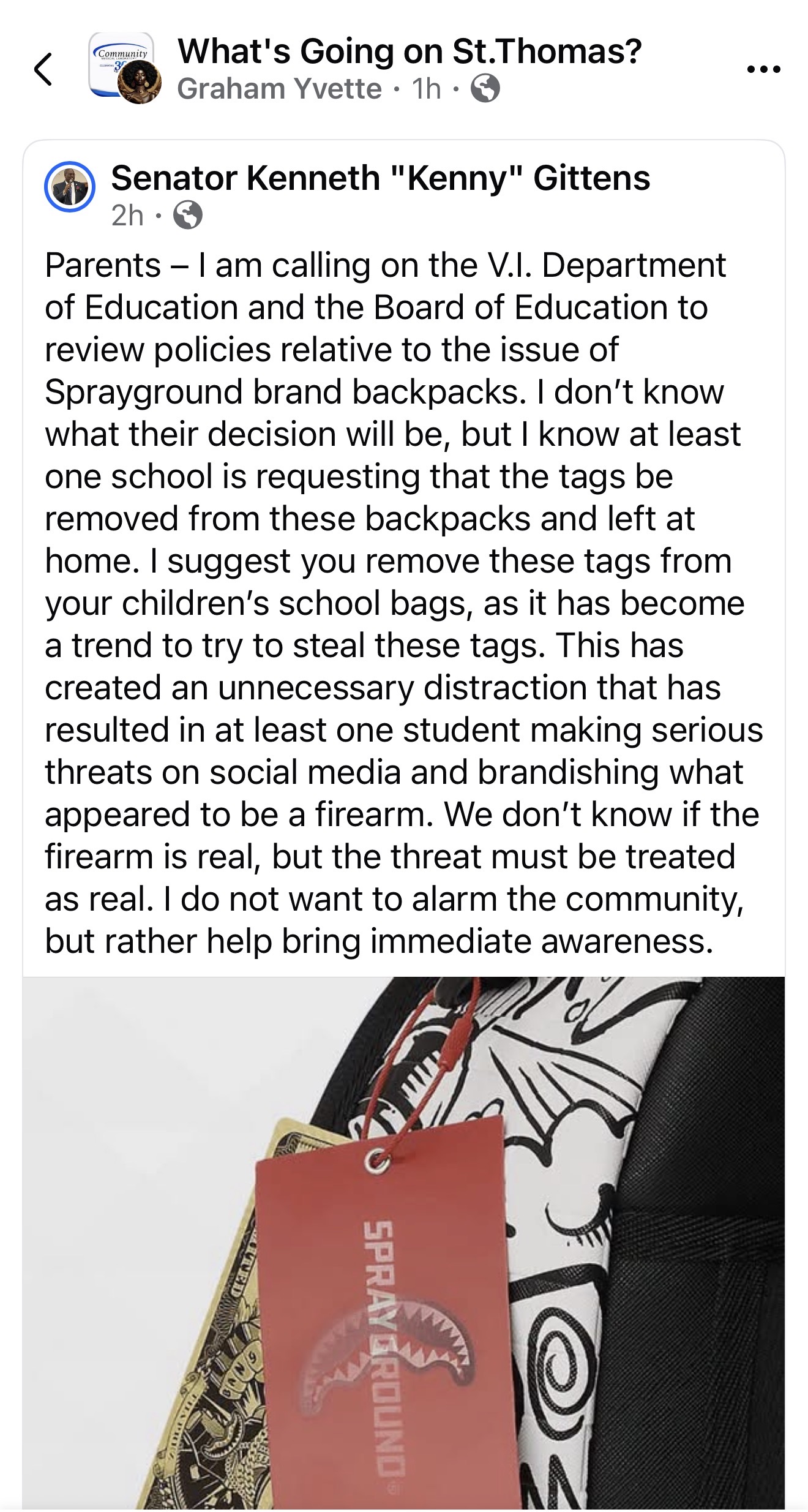
The controversy over Sprayground tags in Virgin Islands schools looks like a story about safety and behavior. Look closer, and it’s a lesson about culture, scarcity, and value — waiting to be taught.
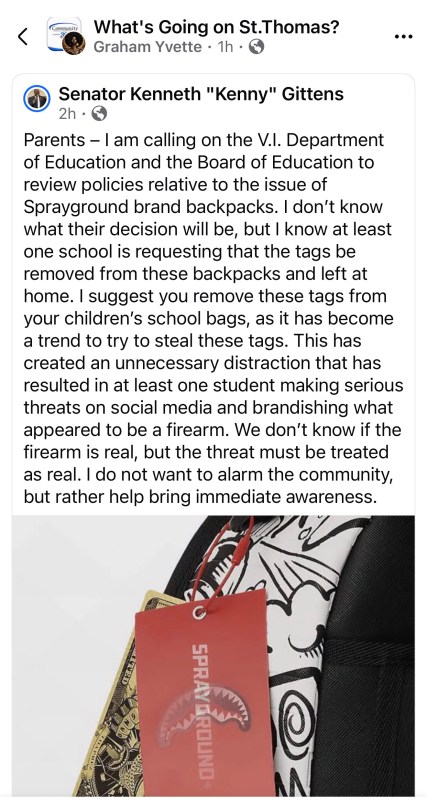
A red tag hanging from a backpack has become the center of an unexpected conversation in the U.S. Virgin Islands.
Senator Kenneth “Kenny” Gittens recently called on the V.I. Department of Education to review its policies on Sprayground backpacks, after reports that students were trying to steal the distinctive tags attached to them. At least one school asked students to remove the tags and leave them at home. More seriously, the senator said the situation had escalated to a student making threats on social media while appearing to display a firearm.
Those allegations deserve to be taken seriously. Anything involving threats or a weapon always does.
But there’s another question worth asking.
How did a tag hanging from a backpack become valuable enough to steal in the first place?
The answer has almost nothing to do with the tag.
And almost everything to do with culture.
When an Object Becomes Currency
Sprayground built its business by turning something functional — a backpack — into a fashion statement and a collectible. Founded by designer David BenDavid, the brand is known for bold graphics, limited releases, and collaborations that made its bags recognizable pieces of streetwear.
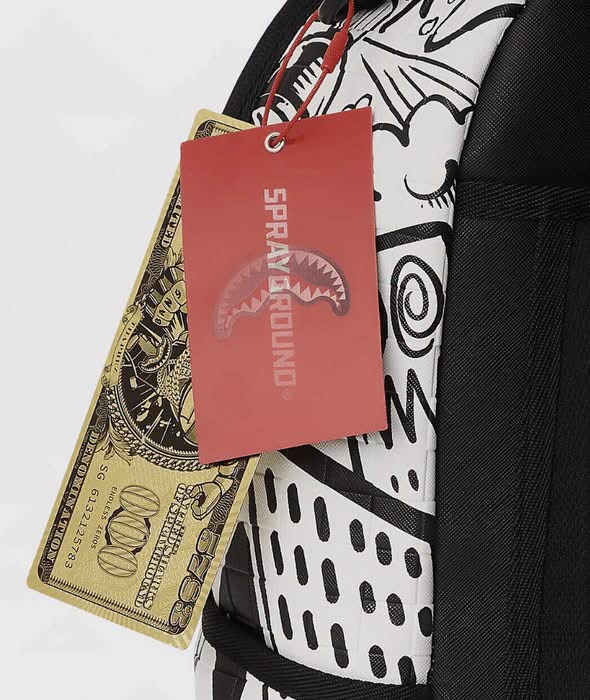
The tags on those bags took on a life of their own.
Students collected them. Traded them. Displayed them together like badges. BenDavid himself has acknowledged that students began taking — and stealing — the tags after the brand changed their design.
Something interesting had happened.
The brand created the tag.
Young people created its value.
And those aren’t the same thing.
A piece of material worth almost nothing becomes valuable the moment a community decides that having it means something.
That’s social currency.
Sneaker Culture Has Seen This Before
For anyone who knows sneaker and streetwear culture, none of this is surprising.
We’ve watched it happen for decades.
A sneaker built to play basketball becomes a collectible. A shoebox becomes something people refuse to throw away. A hangtag becomes proof of a complete pair. A limited collaboration sells out and reappears the same afternoon at three times the price.

The object didn’t change.
Its meaning did.
Scarcity, storytelling, community, and identity combine to create value. Young people understand this intuitively — even without the language economists and marketers use to describe it.
They understand that having what others want creates status. They understand that scarcity increases desire. They understand trading, marketplaces, supply and demand, and branding.
They just might not realize they understand them.
And this is exactly where education can enter.
What If the Backpack Became the Textbook?
Removing the tags may be a reasonable short-term response if theft and conflict are disrupting schools. Safety comes first.
But removing the object doesn’t mean removing the conversation.
What if an educator put a Sprayground backpack on a table and asked one question:
Why do you want this?
That question could open an entire lesson.
Why does one backpack carry more cultural value than another that does the exact same job? Who decides what the tag is worth? Does something have to cost money to have value? Why does scarcity increase demand? How does social media shape what we want? What happens when demand outruns supply?
At what point does wanting something cross the line into believing you’re entitled to take it?
Suddenly a disciplinary problem is also a lesson in economics, marketing, ethics, and decision-making.
This Is What SOLEcial Studies Was Built Around
This is the heart of SOLEcial Studies Community Academy.

For years, we’ve used sneakers and the culture around them as an entry point for education. The premise is simple:
Start with something young people already care about.
From there, you can teach design, business, entrepreneurship, marketing, finance, technology, and history.
A sneaker isn’t only footwear. A limited release teaches supply and demand. A resale teaches profit and loss. A collaboration teaches licensing and intellectual property. An ad teaches storytelling and consumer psychology. The construction of the shoe itself opens the door to material science.
And now a backpack tag can teach those same lessons.
The point was never to convince young people that possessions define them.
It’s almost the opposite.
Education helps them understand the forces shaping why they want those possessions in the first place.
Ask Who Creates the Value
Imagine handing students a single Sprayground tag and asking them to price it.
One says a dollar. Another says ten. Someone else trades away something worth far more to get one.
Then ask: who’s right?
That’s where it gets interesting.
There’s the cost to produce something. There’s its retail price. There’s its resale price. And then there’s its perceived value.
Those four numbers can be completely different.
A marketplace depends on people agreeing — out loud or silently — that something has worth. That’s true of backpack tags. It’s true of sneakers. It’s true of art. It’s true, in stranger and stranger ways, of digital goods too.
Students trading in these cultural marketplaces are already living economics.
We can help them understand what they’re living.
Culture Can Be a Classroom
Adults often dismiss the things young people care about, because those things don’t seem important to us.
But culture gives educators information. It tells us what has their attention.

And attention is the hardest thing any educator has to earn.
If a student walks in already fascinated by sneakers, fashion, gaming, music, or collectibles, we shouldn’t always ask them to leave that at the door.
Sometimes we should bring it into the lesson.
That doesn’t mean excusing theft. It doesn’t mean minimizing threats. Schools have a responsibility to set boundaries when behavior endangers other students.
But discipline and education aren’t opposites.
We can say: you cannot take what belongs to someone else.
And then ask: why did you believe this was worth taking?
The second question may teach us far more.
Today It’s a Backpack Tag. Tomorrow It’s Something Else.
The Sprayground tag will eventually be replaced by another object. That’s how culture works.

The products change. The brands change. The platforms change.
But young people will keep building systems of belonging, identity, and status around the things they value.
Our job isn’t to chase every new trend with a new rule. It’s to help them understand the systems running underneath the trends.
Why do I want this? Who influenced me to want it? What makes it valuable? What am I willing to trade for it? Does owning it change who I am? Could my interest in this become a skill, a career, a business?
Those are much bigger questions than whether a backpack tag belongs in school.
And they’re exactly the kind culture can help us teach.
At Protect Our Culture, we believe culture deserves more than celebration.
It deserves examination. Understanding. Protection.
Sometimes protecting culture means preserving what came before us. Sometimes it means creating opportunities for the people shaping what comes next.
And sometimes it means recognizing that the thing hanging from a young person’s backpack isn’t only a trend.
It might be the beginning of a lesson.
 Protect Our Culture — Stories