I have spent the better part of two decades looking closely at sneakers, teaching young people in SOLEcial Studies, and asking the same question over and over: what does a sneaker tell us about the moment it was made in?
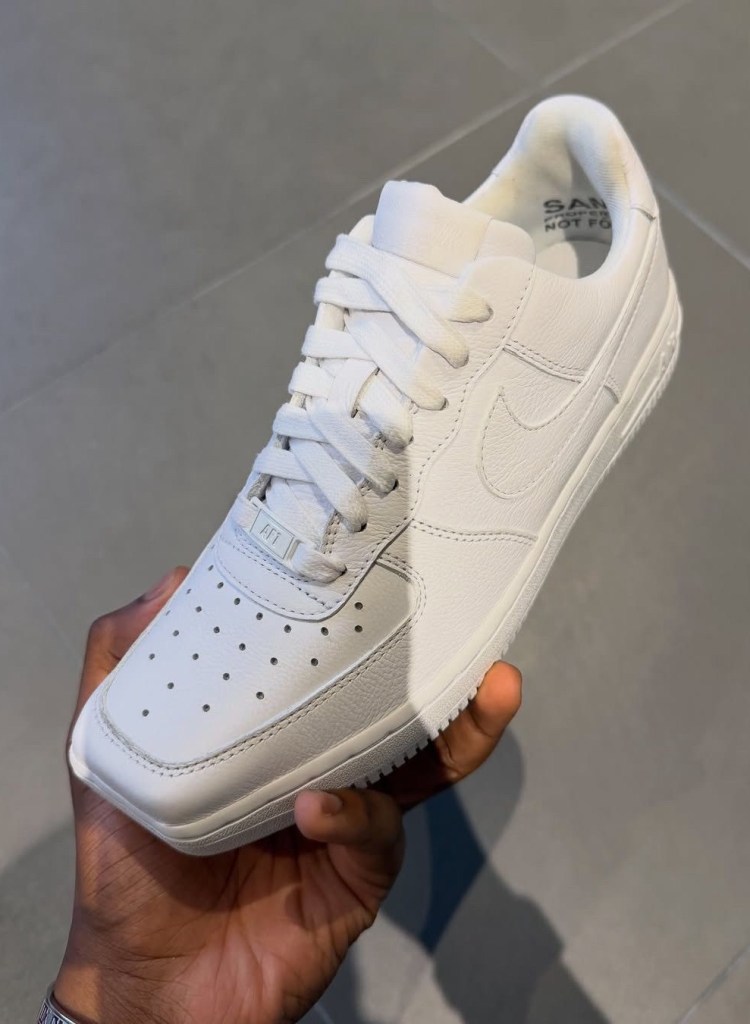
So when Nike previewed a square-toed Air Force 1 at men’s Paris Fashion Week this week, the internet did what it always does…split into camps over whether it’s ugly or genius. But, I wasn’t thinking only about the toe. I was thinking about the room. Because somewhere inside Nike, a small group of people had to stand up and fight for this shoe.
What Are We Looking At
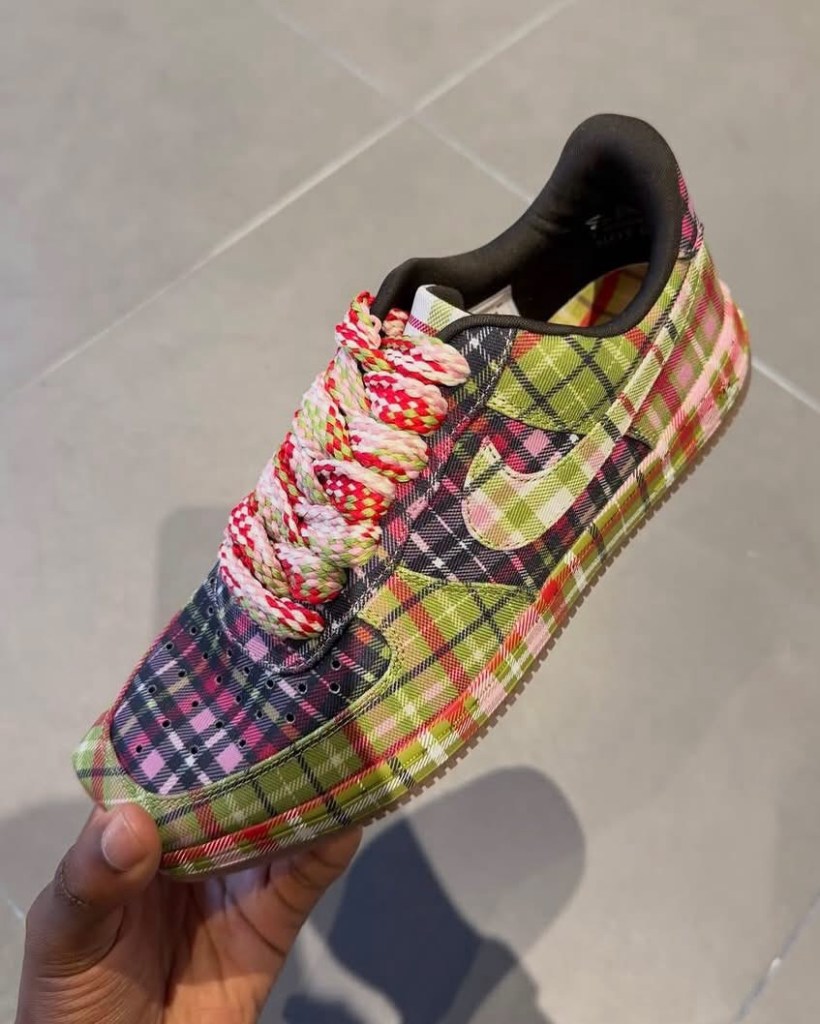
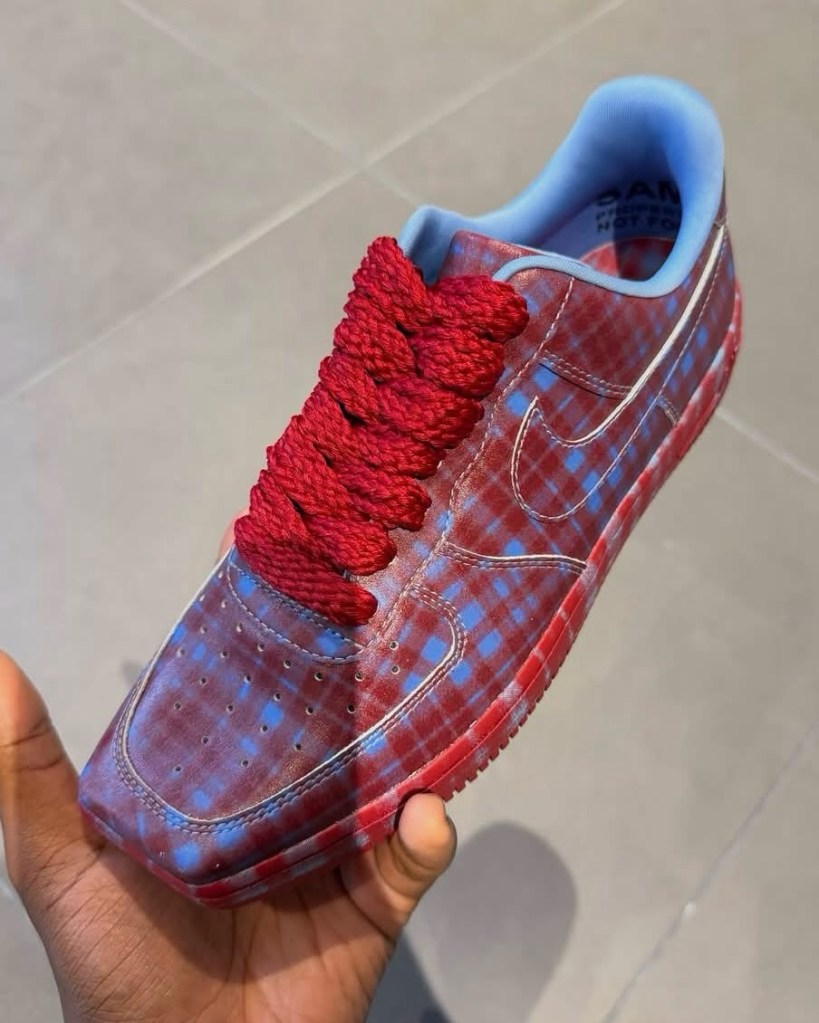
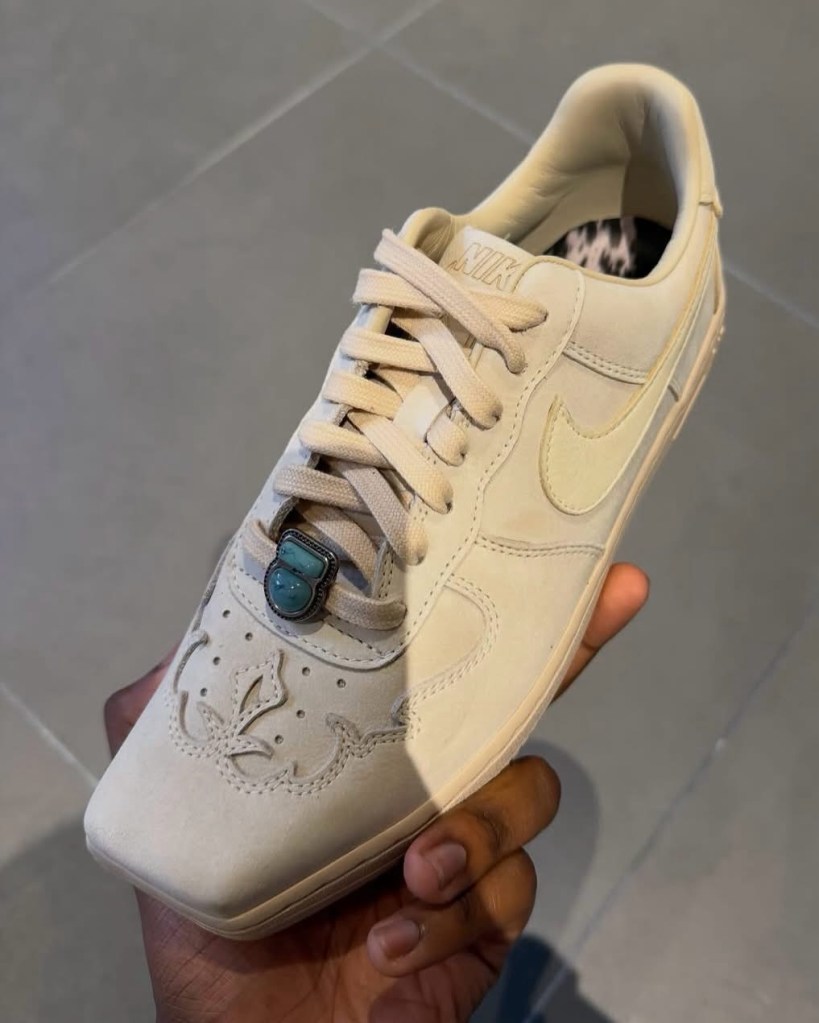
It’s the same AF1 Bruce Kilgore designed in 1982, with one radical change: the toe box is squared off and the whole silhouette trimmed down into something narrower and dressier. Nike previewed it in a run of materials — a loud multi-color plaid, a red-and-blue plaid, tan and brown suede builds with turquoise lace stones and Western-style stitching, and the obligatory white on whites. Word is we’re going to see them released spring 2027, pricing still unconfirmed. Look closely and you’ll see “SAMPLE — NOT FOR SALE” stamped on the collar.
Now hold that image, because I want to walk you through how a shoe like this survives long enough to even become a sample.
The fight nobody posts about
Here’s what most people scrolling past these photos will never see: the argument.
Think about the position the designer was in. You walk into a review with the most recognizable sneaker on the planet — a shoe that prints money exactly as it is — and you propose changing the one thing nobody asked you to touch. The toe. The silhouette. The very outline people recognize from across a parking lot. Every instinct in that building says don’t fix what isn’t broken.
The people who sign off on production are paid to be skeptical. Their job is to ask: who buys this? Will it sell at scale? Are we protecting the franchise or embarrassing it? A square toe in plaid is a risk, and risk is exactly what a billion-dollar icon is built to avoid.
So the designer had to do more than sketch. They had to argue. They had to convince a room that early-2000s nostalgia is real money, that Western wear is bleeding into fashion right now, that the slimmer archival proportions Nike already revived proved the appetite was there. They had to make skeptics see 2027 before 2027 arrived.
Color and materials had its own war to win
Here’s the part I really want my students to understand, because color and materials management is one of the most overlooked careers in this whole industry. That turquoise stone on the lace, that cowboy scrollwork, the rope laces, the specific greens and pinks in that plaid — none of that is decoration. Every single choice was a line item somebody had to defend.
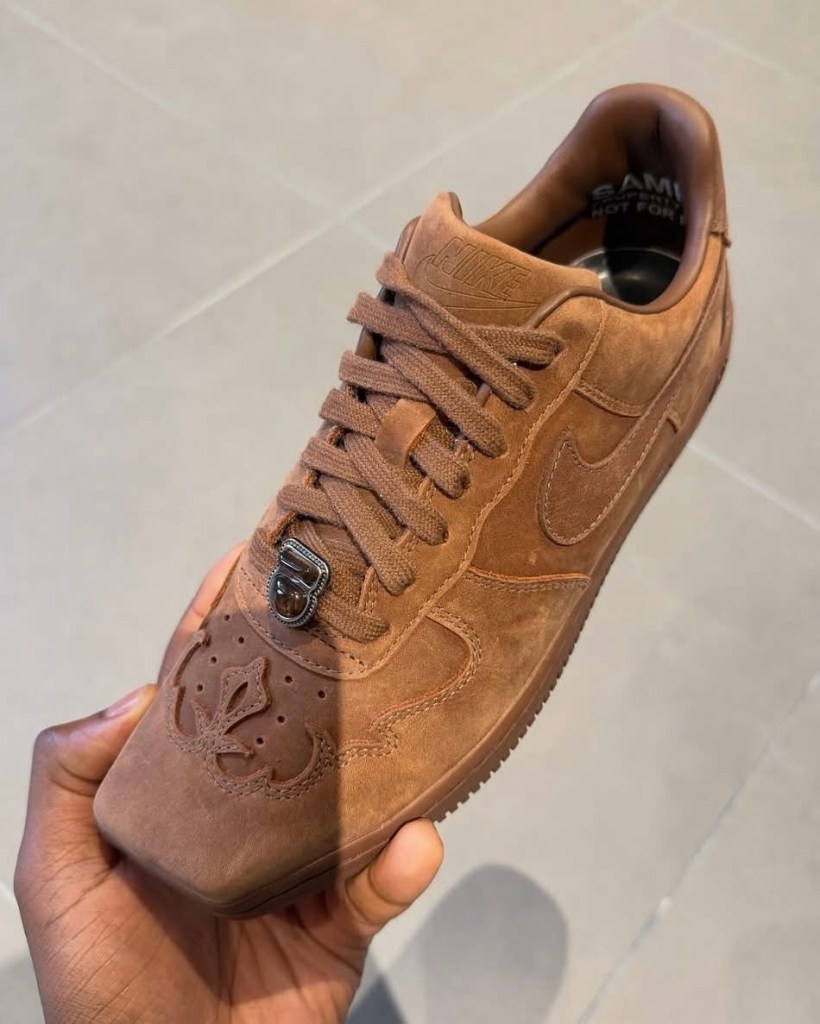
A CMF manager doesn’t just pick pretty colors. They have to source the material, prove it can be made at scale, hit a cost target, and then walk into the same skeptical room and say: trust me, this turquoise charm is the detail that makes the whole shoe. Imagine defending a gemstone on a sneaker lace to someone whose job is the bottom line. That takes taste, data, and conviction.
Multiply that by every colorway in the preview. Each one is a small victory somebody had to win.
Why this is the lesson, not the shoe

Some of you will still hate this AF1. That’s fine….that’s what a preview is for. Nonetheless, I don’t want you to stop at like or dislike, because you’d be missing the actual story.
The story is that creative work is advocacy. The designer fought for the shape. The color and materials team fought for the turquoise and the plaid. Somebody fought for the budget, the timeline, the right to even build the sample. The shoe in your hand isn’t just an object…it’s the visible result of people who believed in something and had the skill to convince others to believe too.
That’s the career. Not just having the idea — defending it. Sourcing it, costing it, standing in room and holding your ground. Design, materials, marketing, the archival work I do — every one of these jobs comes down to the same thing: being obsessed enough to ask why does this look the way it looks?, and brave enough to fight for the answer.
So whether the square-toed AF1 becomes a classic or a curiosity, it already taught the lesson I care about most. Behind every bold object is somebody who refused to back down. Be that somebody.
What do you think…was this a fight worth winning, or a step too far?

